

Families and professionals relocating to Oakland County often find themselves choosing between two of Metro Detroit’s most prestigious addresses: Bloomfield Hills and Birmingham. Both sit along the Woodward Corridor in southeast Michigan, both carry strong school rankings, and both attract affluent buyers from across the country. But they are not the same place, and choosing the wrong one for your lifestyle can be a costly mistake.
The differences go deeper than zip codes. One community is built around privacy, estate-style properties, and a quieter residential pace. The other is built around a walkable downtown, compact lot living, and daily convenience. Understanding which fits your actual life is what this guide is designed to help you with.
By the end of this article, you will understand:
- How the lifestyle, atmosphere, and daily rhythm differ between the two communities
- What home prices, lot sizes, and property taxes look like in each city
- How the school districts compare, including public and private options
- Which community tends to attract specific buyer profiles
- What the 2026 real estate market looks like in both areas
Lifestyle and Atmosphere: Two Very Different Daily Rhythms
The most important difference between Bloomfield Hills, Michigan and Birmingham, Michigan is not price. It is how each place feels once you actually live there.
Bloomfield Hills is a low-density, residential city of roughly 4,500 people spread across just over five square miles. The city describes its own character as rural-residential, centered on wooded properties, privacy, and stately homes. There is limited commercial activity within the city itself. Most errands require driving to neighboring corridors, and that is by design. The city has historically resisted commercial development to preserve its quiet, estate-like character.
Birmingham, by contrast, has a population of around 21,800 people in a similarly sized footprint, which tells you something immediately about density. Its identity is tied directly to its historic downtown, a pedestrian-friendly district along Old Woodward Avenue and Maple Road that includes nearly 300 retailers, restaurants, theaters, and services. You can park once and handle a full Saturday without getting back in your car.
The own-to-rent ratio reflects this difference too. Bloomfield Hills runs approximately 90% owners to 10% renters, reinforcing its status as a deeply residential, established community. Birmingham has more owners (76%) than renters (24%), reflecting its more mixed-use, in-town character.
If your household values privacy, space between neighbors, and a slower residential pace, Bloomfield Hills tends to fit that preference. If walkable errands, downtown dining, and community events matter to your daily routine, Birmingham tends to feel more naturally aligned.
Home Prices, Lot Sizes, and Property Taxes
These two communities have different price profiles, land patterns, and tax structures. Understanding all three before you begin searching will save you meaningful time.
Home Prices and Market Trends in 2026
Bloomfield Hills, MI, home prices sit at the higher end of the Oakland County luxury spectrum. Estate-style properties on wooded lots routinely list in the $1.5M to $5M range, with some landmark homes well above that. The city’s low density, architectural prestige, and adjacency to the Cranbrook Educational Community support strong valuations. Appreciation has been steady rather than volatile, which appeals to buyers looking for long-term stability over short-term flips.
Birmingham carries strong prices too, but with a wider range at the entry level. Single-family homes in Birmingham start closer to the $600K to $800K range in established neighborhoods, with luxury properties in the $1.2M to $4M range. The downtown proximity commands a premium for buyers who want walkable convenience built into their daily life.
Both markets have maintained solid appreciation through 2025 and into 2026, driven by limited inventory, strong demand from corporate relocations, and consistent interest from buyers in the greater Detroit professional community.
Lot Sizes: Estate Scale vs. Compact Living
This is one of the clearest differences between the two cities.
Bloomfield Hills zoning requires minimum lot sizes ranging from three-quarters of an acre to two full acres, depending on the district. Most homes sit on wooded lots with mature tree canopies, meaningful setbacks from the road, and genuine distance between neighboring properties.
Birmingham zoning allows for much smaller parcels. Downtown and mixed-use areas allow denser building forms. For buyers who want in-town convenience and a manageable property footprint, Birmingham’s lot patterns are a clear advantage. For buyers who want privacy and acreage, Bloomfield Hills is the better fit.
Property Taxes
Property tax rates in Birmingham vs Bloomfield Hills, MI, differ in ways that matter when calculating long-term carrying costs on a luxury purchase.
Bloomfield Hills operates as a city with its own millage rates applied to assessed value. The combination of city, county, school district, and other levies produces a total millage rate that buyers should verify, as exact figures depend on the specific parcel, exemption status, and the current assessment.
Birmingham has its own millage structure, and given its higher residential density and more active downtown infrastructure, the rates can differ meaningfully from those in Bloomfield Hills. Both cities offer Michigan’s homestead exemption for primary residences, which reduces the taxable rate for owner-occupants.
Any serious buyer comparing these communities should run a side-by-side tax estimate on specific properties using Oakland County’s public assessment tools. This is one area where working with a knowledgeable local agent pays for itself quickly.
Schools: Public Rankings and Private Options
Both cities compete at the very top of Michigan’s school rankings, which is a key reason families move to this corridor in the first place.
Bloomfield Hills School District
The Bloomfield Hills School District consistently ranks among the top public school systems in the state. Niche.com ranks it first of 617 places for best public schools in Michigan. Within the district, the International Academy, which serves grades 9 through 12, ranks second among all public schools statewide.
The district serves students in Bloomfield Hills and the surrounding Bloomfield Township, and the schools draw students for competitive academic programming, strong extracurricular offerings, and consistent college placement results.
Birmingham School District
The Birmingham School District ranks second among 617 places for best public schools in Michigan on the same Niche.com ranking. That is not a consolation prize. The gap between first and second is minimal when measured in outcomes, parent satisfaction, and actual academic performance. Families who choose Birmingham for school quality are making an objectively strong decision.
Private School Options in Oakland County
This is an area where the Bloomfield Hills side of the corridor stands out, and it matters notably for families weighing the two communities.
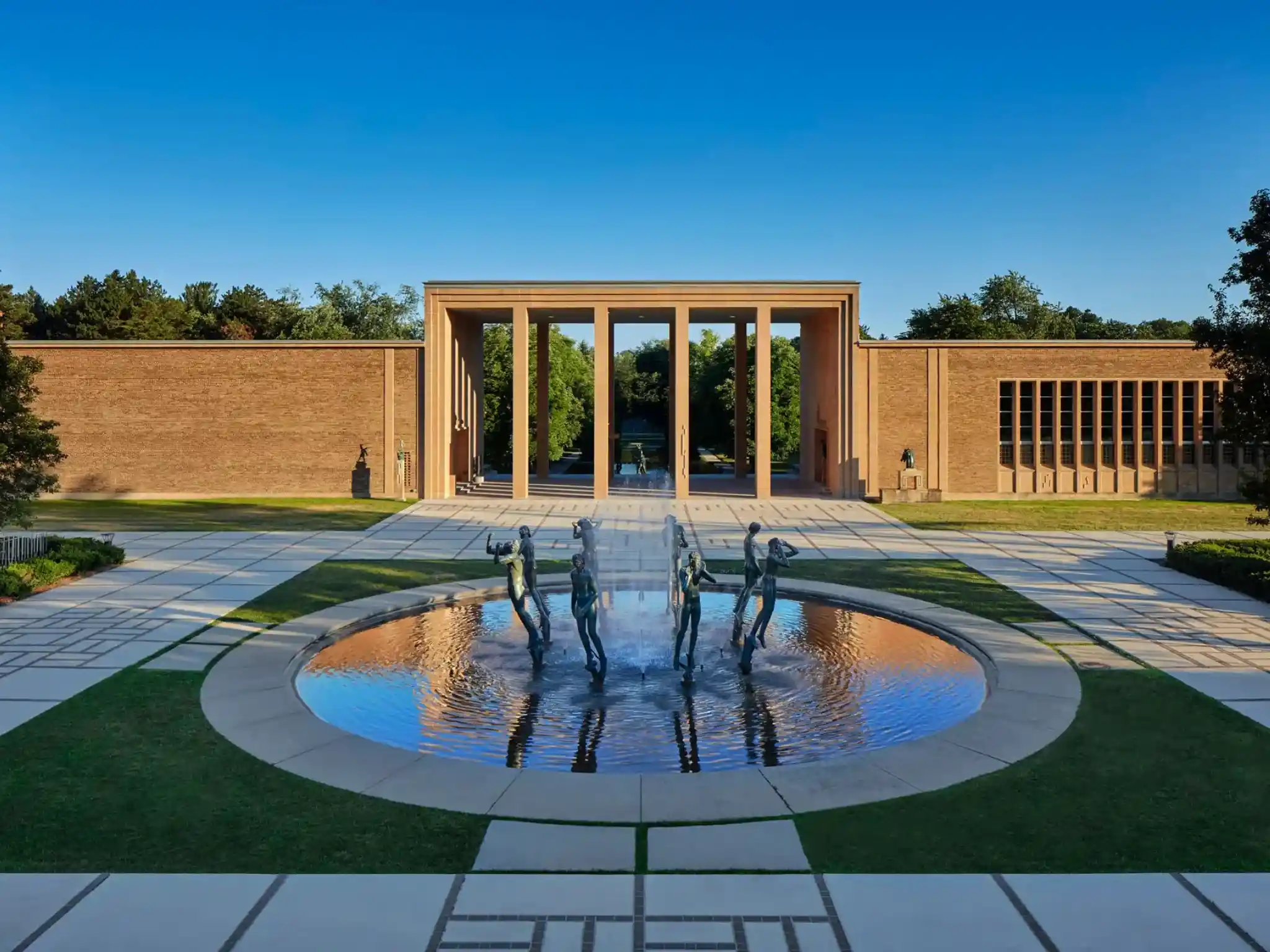
Cranbrook Schools, located directly within Bloomfield Hills, is one of the most recognized private educational institutions in the country. The campus includes separate schools for different age groups and draws students from across Oakland County and beyond. The surrounding Cranbrook Educational Community includes the Institute of Science and the Art Museum, making it a cultural and academic anchor for the entire area.
Brother Rice High School in Bloomfield Township is a well-regarded all-boys Catholic school with a strong academic and athletic reputation, drawing students from Birmingham, Bloomfield Hills, and much of Oakland County.
The Roeper School, with campuses in the area, serves gifted students from pre-K through 12th grade and has a long-standing reputation for its approach to educationally advanced learners.
For families prioritizing access to private schools, the Bloomfield Hills area offers a concentration of respected options that is genuinely difficult to match elsewhere in Metro Detroit.
If you are still working through which school setup fits your family, our team at DG Realty Group can walk you through attendance boundaries, private school proximity by address, and how school district lines interact with specific neighborhoods.
Walkability, Errands, and Daily Convenience
This category has a clear leader depending on what matters to your household.
Birmingham’s walkability is one of its most consistent selling points. Downtown Birmingham is intentionally designed for pedestrian use. Five municipal parking garages anchor the core, with free parking available in municipal structures during shorter visits. Shopping, dining, live events, the farmers market at Booth Park, and service businesses are all within easy walking distance of each other and from many residential streets near the core.
For households that value the ability to walk to dinner, catch a Sunday morning farmers market, or let a teenager walk to the library independently, Birmingham delivers that in a way few other Oakland County suburbs can match.
Bloomfield Hills functions differently by design. The city’s master plan explicitly notes limited sidewalks, a focus on local residential streets, and the absence of a contract for transit service. Most of daily life requires a car. That is not a flaw for the buyers who choose it. It is simply the tradeoff for greater privacy, wooded lots, and a more secluded environment.
If your household is evaluating walkable suburbs near Detroit, Birmingham belongs near the top of that list. If your priority is acreage, distance from commercial activity, and a more private setting, the character of Bloomfield Hills is unlikely to feel limiting once you are settled.
Community Character and Social Life
Both communities have strong identities, but they attract different social rhythms.
Bloomfield Hills carries what longtime residents describe as an “old money” character. The city became a preferred address during the auto industry boom, when executives, architects, entertainers, and professional athletes from Detroit’s major sports teams established homes here. That history shaped a community that values discretion, established institutions, and private social life. The Bloomfield Hills Country Club and the Bloomfield Open Hunt Club remain meaningful social anchors. Community events tend to be quieter and more private in character.
Birmingham’s community life is more public-facing. Downtown Birmingham hosts outdoor movie nights at Booth Park, a farmers market, Art Experience events, and a retail calendar that draws visitors from across Metro Detroit. The city’s parks and recreation programming is active and family-oriented. The downtown area sees consistent foot traffic from both residents and visitors, which creates an energy that feels more like a small city than a suburb.
Neither profile is superior. A family that values a structured, private social scene with access to private clubs and estate-level living will likely feel more at home in Bloomfield Hills. A family that wants built-in community events, walkable access to dining and shopping, and a more connected neighborhood feel will likely find Birmingham more natural.
Population Density and Neighborhood Feel
The population figures alone tell part of this story: approximately 4,500 people in Bloomfield Hills versus 21,800 in Birmingham, in nearly identical geographic footprints.
That density difference shows up in how each community feels on the ground. Bloomfield Hills streets are quiet, tree-lined, and largely without foot traffic. You can drive its residential areas on a weekday morning and see almost no one. That privacy is a selling point for buyers, particularly those in executive or public-facing roles who want their home to be genuinely set apart.
Birmingham streets near downtown have real pedestrian presence, especially on weekends. There is a visible community energy that appeals to families with children, younger professionals, and buyers who moved from urban environments and want to retain some of that activity level without giving up a strong school district and a single-family home.
The Woodward Corridor connects both communities and provides access to the broader Metro Detroit area, including Detroit proper, Troy, Royal Oak, and the northern Oakland County municipalities. Both cities benefit from this corridor access for commuting purposes.
Who Tends to Choose Each Community
Based on buyer patterns in this market, certain profiles consistently end up in one community over the other.
Buyers who tend to choose Bloomfield Hills:
- Executives and C-suite professionals who value privacy and want distance from commercial activity
- Families prioritizing access to Cranbrook Schools and other private institutions
- Buyers purchasing estate-level homes over $2M who want acreage and architectural distinction
- Professional athletes and entertainment industry figures relocating to Metro Detroit
- Long-tenured Oakland County residents upgrading to larger properties
Buyers who tend to choose Birmingham:
- Families with younger children who want walkable access to parks, events, and services
- Dual-income professional households relocating from urban markets like Chicago, New York, or San Francisco, who want some of that energy preserved
- Buyers in the $700K to $1.5M range who want strong schools and downtown access
- Empty nesters who want less property to maintain and more daily convenience
- Buyers prioritizing resale liquidity, as Birmingham’s broader price range supports a deeper buyer pool
Neither city is a better choice in absolute terms. The right answer depends entirely on which lifestyle aligns with your actual priorities once you remove status associations and focus on day-to-day living.
Why DG Realty Group Is the Right Partner for This Decision
Choosing between Bloomfield Hills and Birmingham is not just a lifestyle decision. It is one of the most financially meaningful choices a buyer can make in Southeast Michigan, and the right guidance matters.
Dan Gutfreund and the DG Realty Group, based at 415 South Old Woodward Avenue in Birmingham, bring direct expertise in both communities to every client relationship. Dan has been ranked the number one agent in Southeast Michigan for individual sales by RealTrends , and recognized as a Top 100 Global Agent by Sotheby’s International Realty for 2024 and 2025. Over $1B in career sales and a record $40 million transaction in Michigan reflect the level of market knowledge the team brings to each conversation.
- Deep local knowledge across both markets: The DG Realty Group works actively in Bloomfield Hills, Birmingham, and the surrounding Oakland County communities. They understand the nuances of specific streets, school boundaries, and neighborhood pricing that broad market reports miss.
- Global exposure through Sotheby’s International Realty: Listings are distributed to a network that generates over 90 million annual property views, reaching buyers across the country and internationally.
- White-glove transaction support: From market preparation and professional staging to photography and negotiation, every step is handled at a level that reflects the luxury market these communities represent.
- A full team structure: Dan is supported by a Director of Operations, a Director of Client Relations, a licensed Realtor, and a Director of Social Marketing and Videography, meaning clients benefit from the support of a team.
- Hundreds of transactions in the Birmingham-Bloomfield corridor: That volume creates pattern recognition that is genuinely valuable when advising clients on which community and which specific property will best serve their goals.
If you are relocating to Oakland County and weighing these two communities, working with a team that lives and operates in both is a meaningful advantage.
Frequently Asked Questions
Question: Is Bloomfield Hills or Birmingham better for families with school-age children?
Both communities rank at the very top of Michigan’s public school rankings, with Bloomfield Hills at first and Birmingham at second statewide. For families prioritizing access to private schools, Bloomfield Hills has a distinct advantage thanks to Cranbrook Schools on its doorstep. For families who want excellent public schools, walkable parks, and community events, Birmingham is equally strong.
Question: What is the typical price difference between homes in Bloomfield Hills vs. Birmingham?
Entry-level luxury in Birmingham starts roughly in the $600K to $800K range for single-family homes, with the top of the market extending into the multi-million range. Bloomfield Hills tends to start higher, with many listings beginning in the $1M to $1.5M range and estate properties reaching $5M and above. The difference reflects lot size, architectural scale, and the type of living each city supports.
Question: Do I need a car to live in Bloomfield Hills?
Yes, effectively. Bloomfield Hills has limited sidewalks, no transit service, and minimal commercial activity within its boundaries. Daily errands, dining, and most services require driving to adjacent corridors. This is consistent with the city’s intentional residential character, not an oversight.
Question: Are property taxes notably different between the two cities?
Millage rates differ, and the total tax burden on a given property depends on assessed value, applicable exemptions, and the specific combination of city, township, school district, and county levies. The best way to compare is to pull the current assessment for specific properties from Oakland County’s public records and work with a local agent to model the actual carrying costs.
Question: Can DG Realty Group help with both Bloomfield Hills and Birmingham purchases?
Yes. DG Realty Group actively serves both communities, as well as Birmingham, Royal Oak, Franklin, Rochester, and Troy. Their team works daily in the Oakland County luxury market and can provide specific property-level guidance to buyers comparing the two cities.
Closing Thoughts
Bloomfield Hills and Birmingham are two of the most desirable communities in Metro Detroit, and both offer what most buyers seek: strong schools, stable home values, and a high standard of living. The decision between them comes down to what matters most once the novelty of the address wears off.
If your daily life benefits from space, privacy, and a quieter pace with estate-level properties and access to some of Michigan’s best private schools, Bloomfield Hills is built for that. If you want walkable errands, a lively downtown, and the kind of neighborhood energy that keeps community life active, Birmingham consistently delivers.
Both decisions are good ones. The question is which one is right for how your household actually lives.
Ready to make a decision? Contact DG Realty Group at 415 S. Old Woodward Avenue, Birmingham, MI 48009, or reach the DG Realty team directly at 248-497-4646. Visit iSellMichigan.com to view current listings, explore neighborhood guides, and start your search with Michigan’s top-ranked luxury real estate team.