


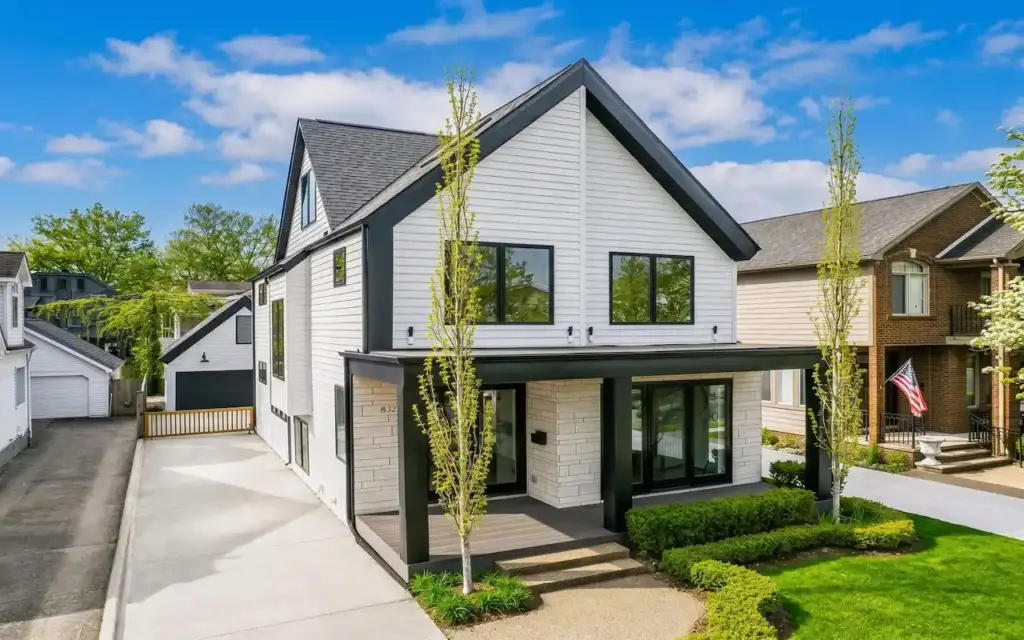
Smart home trends in 2026 have moved from optional upgrades to baseline buyer expectations. Homes with integrated smart systems are selling faster and commanding price premiums of $10,000+ over comparable listings without them. If you are buying or selling in Southeast Michigan, understanding what today’s buyers want and why directly affects your negotiating position.
Here is what this guide covers:
- Which smart home upgrades deliver the strongest return on value
- How Matter-compatible systems and AI automation are reshaping buyer expectations
- What wellness technology buyers are now requesting at the showing stage
- How energy management systems affect both utility bills and resale appeal
- What sellers in the Birmingham and Bloomfield Hills market should prioritize
Does Smart Home Technology Actually Increase Property Value?
Yes, and the data from 2026 is clear. Homes equipped with integrated smart systems consistently outperform traditional listings in both sale speed and final price.
The U.S. smart home market reached $54.53 billion in revenue in 2026. Over half of American households already use some form of smart home technology. That shift means buyers no longer compare a home to what it was five years ago. They compare it to connected, automated homes that reduce friction in daily life.
For sellers in the Birmingham, MI market, this matters. Luxury buyers in areas like Bloomfield Hills and Birmingham expect smart features to be built in, not bolted on.
The key distinction in 2026: buyers are not paying a premium for gadgets. They are paying for seamless control, lower utility costs, and security they can manage remotely.
What Is Matter-Compatible Connectivity and Why Do Buyers Care?
Matter is the universal wireless protocol that allows smart home devices from different manufacturers to work together through a single app or hub.
Before Matter, a buyer moving into a smart home often inherited a fragmented system: one app for the thermostat, another for the lights, a third for the locks. That friction killed convenience. Matter-compatible systems solve that. Devices from Apple, Google, Amazon, and Samsung now speak the same language, meaning a buyer can control everything from one interface.
For buyers in 2026, asking whether a home is Matter-compatible is becoming as routine as asking about the age of the HVAC or the roof condition. Homes with interoperable, hub-based systems require no retrofitting, which is a meaningful selling point.
What sellers should know: Upgrading to Matter-compatible hubs, smart thermostats, and lighting before listing removes a common buyer objection without requiring major renovation.
Which AI Automation Features Are Buyers Requesting Most?
Buyers in 2026 want automation that learns their patterns and adjusts without input.
The most requested AI-powered features in new and resale homes include:
- Predictive climate control: thermostats that learn daily routines and pre-condition rooms before occupants arrive. Devices like the Google Nest Learning Thermostat and Ecobee SmartThermostat have become standard references in buyer conversations.
- Occupancy-based automation: motion sensors and geofencing that trigger lighting scenes, adjust temperature, and activate security modes when someone enters or leaves a zone.
- Automation routines: pre-set sequences that run at specific times or conditions (morning mode, away mode, bedtime mode) without requiring manual input.
The appeal is not just convenience. Predictive automation reduces energy waste. Buyers understand that a home that manages itself costs less to operate, which directly affects their post-purchase monthly budget.
For Michigan homes where heating and cooling costs are significant, AI-managed climate systems represent a compelling, quantifiable benefit.
How Do Energy Management Systems Affect Buyer Decisions?
Energy management systems, including smart energy monitors, solar-integrated panels, and energy-star rated devices, are now a primary buying consideration, not a secondary one.
Rising utility costs across Michigan have pushed sustainability awareness to the forefront of buyer priorities. A home that can show documented energy savings on an app dashboard is one buyers trust. Energy monitoring tools give that documentation automatically.
Key energy features buyers are evaluating in 2026:
- Smart meters and energy monitors that track real-time consumption by room or appliance
- Edge computing thermostats that process data locally rather than relying on cloud connections, improving response time and reliability
- Mesh network infrastructure that ensures smart devices maintain consistent connectivity throughout larger homes
Luxury homes in Bloomfield Hills and Birmingham with verifiable energy efficiency scores consistently attract stronger initial offers. Buyers see lower utility bills as a direct financial benefit they can calculate before making an offer.
What Security Features Do Modern Buyers Expect?
Remote security monitoring is now an expectation, not a luxury feature.
In 2026, buyers walk into showings and mentally note whether a home has an integrated security ecosystem. The components that matter most:
- Cloud-connected security cameras with remote access via smartphone
- Smart doorbells with two-way audio and package detection
- Biometric locks or keypad entry with remote locking capability
- Smart smoke detectors and leak sensors are tied to the main automation hub
The leak sensor point deserves specific attention. Water damage is one of the most expensive home insurance claims. A buyer who sees leak sensors installed under sinks, near the water heater, and at appliance connections views that as a sign of a well-maintained, forward-thinking home. It signals care, and care builds confidence.
For sellers, these are low-cost installations, often under $300 for a full leak detection setup, that communicate significantly higher home management standards to a buyer.
Is Wellness Technology Becoming a Real Factor in Home Sales?
Yes. Wellness technology is one of the fastest-growing segments in residential real estate, and luxury market buyers are specifically requesting it.
This includes:
- Air purifiers integrated with the home’s HVAC and monitored through a central app, showing real-time indoor air quality
- In-home saunas and infrared saunas built into dedicated spaces, particularly in basement or primary suite additions
- Smart steam rooms with programmable temperature and session timers
- Smart lighting systems with adjustable color temperature that support circadian rhythm, with cooler light in the morning and warmer light in the evening
Smart lighting deserves its own note. Programmable lighting that adjusts automatically throughout the day is no longer a novelty. Buyers with home offices, a standard feature request in 2026, want lighting that reduces eye strain during work hours and transitions naturally in the evening. Homes with pre-installed, app-controlled lighting systems incur a high post-purchase cost for buyers.
For sellers in the luxury segment, wellness features support price-positioning conversations. A home with an infrared sauna and integrated air quality monitoring does not compete on the same tier as one without those features, even if the square footage is comparable.
Can Smart Home Upgrades Be Retrofitted Without Major Renovation?
Most of them, yes. This is one of the more overlooked facts in the buyer conversation.
Retrofit smart home solutions have improved substantially. Battery-powered sensors, wireless smart plugs, and Z-Wave or Zigbee devices require no hardwiring. A homeowner can install a complete smart security, climate, and lighting system in a weekend without touching a wall.
The important distinction for buyers evaluating older homes in areas like Royal Oak or Troy: a home built in the 1990s can support a fully integrated smart home system. The key is whether the Wi-Fi infrastructure (ideally a mesh network) can support the device load.
Installing a mesh network, a central hub, and basic automation before listing can meaningfully shift buyer perception, often for under $1,500 in equipment and installation.
Why DG Realty Group Is the Right Choice for Smart Home Buyers and Sellers in Michigan
Buying or selling a smart home in 2026 requires an advisor who understands how integrated technology translates into real market value. DG Realty Group brings that expertise, along with the rankings and network to back it up.
Southeast Michigan’s #1 Ranked Real Estate Advisor:
Dan Gutfreund is ranked #1 in Southeast Michigan for individual sales by RealTrends and the Wall Street Journal. That means every pricing and negotiation decision is backed by verified, top-tier market performance.
Verified Global Recognition:
DG Realty Group holds a Top 100 global ranking for Sotheby’s International Realty in 2024 and 2025. This connects Michigan listings to an international buyer audience that actively seeks technology-integrated properties.
White-Glove Pre-Listing Services:
The team provides access to vetted contractors, stagers, and photographers who know how to present smart home features as a lifestyle upgrade rather than a technical checklist. This directly strengthens buyer interest and initial offers.
$800M+ in Local Sales Expertise:
With over $800 million in career sales across Birmingham, Bloomfield Hills, Troy, and Rochester Hills, DG Realty Group understands which smart home upgrades carry weight in which neighborhoods, and how to price them accordingly.
Global Marketing Reach:
Through Sotheby’s platform, listings reach 90 million annual property views. Smart homes with premium upgrades get in front of the buyers who are specifically looking for them.
Choosing the right advisor is what separates a strong sale from a missed opportunity. DG Realty Group delivers both the local knowledge and the global reach your property deserves.
Frequently Asked Questions
Do smart home features actually help a home sell faster in Michigan?
Yes. Nationally, homes with integrated smart systems are selling faster than comparable homes without them. In Michigan’s luxury market, particularly in Birmingham and Bloomfield Hills, buyers are actively filtering for smart home features during their search process.
What is the most cost-effective smart home upgrade before listing?
Smart thermostats, smart doorbells, and leak sensors offer the highest perceived value relative to cost. A complete setup typically runs $500–$1,200 and signals to buyers that the home has been actively maintained and modernized.
Does a home need to be new construction to support smart home technology?
No. Most smart home systems are designed for retrofit installation. Wireless protocols like Z-Wave, Zigbee, and Matter allow devices to be added without rewiring. The main requirement is a strong, stable Wi-Fi network, ideally a mesh system in larger homes.
What smart home features are most important to luxury buyers in 2026?
Luxury buyers in Southeast Michigan are prioritizing integrated security systems, AI-managed climate control, wellness technology (air-quality monitoring, smart lighting, infrared saunas), and Matter-compatible hubs that enable seamless control of all devices from a single interface.
Will smart home technology continue to affect property values beyond 2026?
All indicators point to yes. As energy costs rise and buyer expectations normalize around automation, homes without smart infrastructure will face increasing pressure to compete on price. Installing future-proof systems now protects both resale value and daily living costs.
Conclusion
Smart home trends in 2026 represent a permanent shift in what buyers define as a livable, competitive home. Smart lighting, AI climate control, and integrated security are now baseline expectations across the Michigan luxury market. Energy management and wellness technology are shaping offer decisions, not just first impressions. And most of these features can be installed without major renovation, which means sellers of older homes in Birmingham, Royal Oak, and Troy have a real opportunity to reposition their listings before they hit the market.
Whether you are buying a smart home or preparing one for sale, having the right advisor changes the outcome.
DG Realty Group Signature Sotheby’s International Realty 415 South Old Woodward Avenue, Birmingham, MI 48009 Visit iSellMichigan.com or contact Dan Gutfreund to schedule a consultation and learn what your home is worth in today’s market.